Thursday, November 15, 2018

European Economic Community

The European Economic Community was a regional organization aimed at achieving economic integration between its Member States. It was created by the Rome Treaty of 1957. After the establishment of the European Union  in 1993, the EEC was incorporated and renamed the European Community. In 2009, the EC institutions were included in the wider EU framework and the company no longer existed.
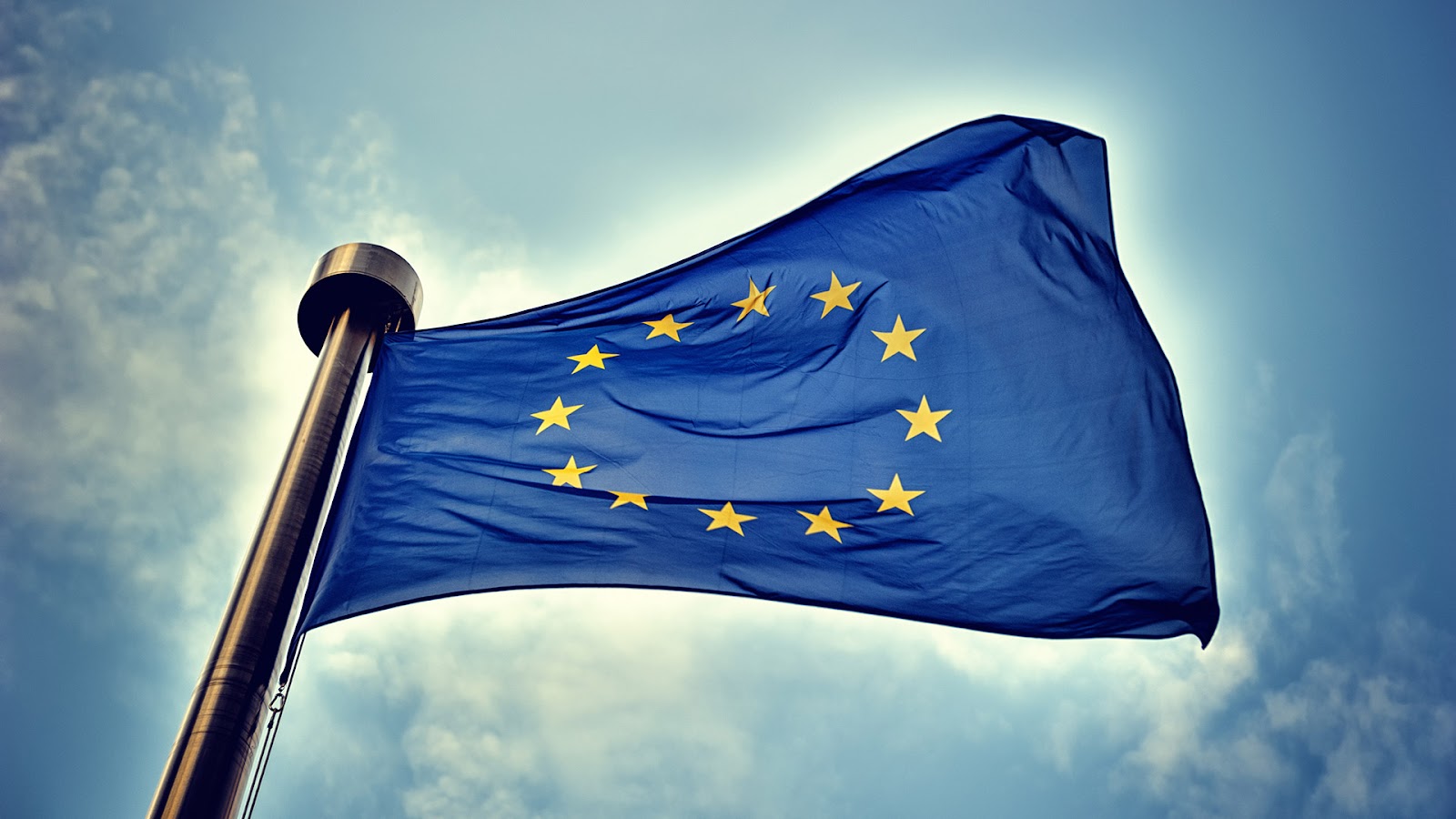
Members of the European Economic Community
The six countries that set up the European Economic Community and the other two Communities were known as the "inner six" - "outer seven" were the countries that created the European Free Trade Association. Six countries were France, West Germany, Italy and three Benelux countries: Belgium, the Netherlands and Luxembourg. The first expansion was in 1973, when Denmark, Ireland and the United Kingdom joined. Greece, Spain and Portugal joined the 1980s. The former East Germany became an integral part of the EEC after the reunification of Germany in 1990. Since the creation of the EU in 1993, it has expanded to include sixteen other countries by 2013.

The purpose of the European Economic Community
The main objective of the preamble to the EEC was "to preserve peace and freedom and build the foundations of an ever closer union among the peoples of Europe".


Wednesday, October 31, 2018

What is Council of the European Union?

It is one of the seven Institutions of the European Union and listed as a third. It is part of the essentially bicameral EU legislature and represents the executive governments of the EU's member states. The Council of the European Union, together with the European Council, is the only EU institution that is not "European".

The presidency of the Council of the European Union is Austria.

What does the Council of the European Union do?
Adopts the EU budget
- It adopts the EU budget together with the Parliament.
Concludes international agreements
- The Council provides the mandate to the Commission to negotiate on behalf of the EU agreements between the international organisations and non-EU and EU countries.
Negotiates and adopts EU laws
- It adopts and negotiates legislative acts.
Develops the EU's common foreign and security policy
- The Council implements and defines security policy and EU foreign on the basis of guidelines set by the European Council.
Coordinates member states' policies
- economic and fiscal policies;
- education, culture, youth and sport;
- employment policy.

History
The Council first appeared in the European Coal and Steel Community (ECSC) as the "Special Council of Ministers", set up to counterbalance the High Authority (the supranational executive, now the Commission). The original Council had limited powers: issues relating only to coal and steel were in the Authority's domain, and the Council's consent was only required on decisions outside coal and steel. As a whole, the Council only scrutinised the High Authority (the executive). In 1957, the Treaties of Rome established two new communities, and with the two new Councils: the Council of the European Atomic Energy Community (EAEC) and the Council of the European Economic Community (EEC). However, due to objections over the supranational power of the Authority, their Councils had more powers; the new executive bodies were known as "Commissions".

Tuesday, October 16, 2018

What is Regional organization?

Regional organizations to a certain extent are international organizations because they include international membership and include geopolitical units that operatively exceed one rational nation. However, their participation is characterized by the limits and boundaries that are specific to a specific and unique geography, for example, continents, or geopolitics, such as economic blocks. They are designed to promote cooperation and political and economic integration or dialogue between countries or organizations within a limited geographic or geopolitical boundary. They both reflect the common forms of development and history that have been promoted since the end of the Second World War, as well as the fragmentation that characterizes globalization. Most RVs work together with well-established multilateral organizations such as the United Nations. Although in many cases a regional organization is simply called an international organization, in many other cases it is useful to use the term "regional organization" to emphasize the limited scope of a specific membership.

List of Regional organizations:
  • Shanghai Cooperation Organisation
  • Asia-Pacific Economic Cooperation
  • Commonwealth of Nations
  • South Asian Association for Regional Cooperation
  • Organization for Security and Co-operation in Europe
  • Organization of American States
  • NATO
  • African Union
  • ASEAN
  • European Union
  • European Economic Area
  • North American Free Trade Agreement
  • Economic Cooperation Organization
  • Arab League
  • Union of South American Nations
  • OPEC
  • CIS
  • Mercosur/Mercosul
  • Collective Security Treaty Organisation
  • Eurasian Economic Union
  • Central American Integration System
  • Association of Caribbean States
  • CARICOM

Friday, September 28, 2018

Member state of the European Union


The European Union consists of 28 member states that include:
  • Austria
  • Belgium
  • Bulgaria
  • Croatia
  • Cyprus
  • Czech Republic
  • Denmark
  • Estonia
  • Finland
  • France
  • Germany
  • Greece
  • Hungary
  • Ireland
  • Italy
  • Latvia
  • Lithuania
  • Luxembourg
  • Malta
  • Netherlands
  • Poland
  • Portugal
  • Romania
  • Slovakia
  • Slovenia
  • Spain
  • Sweden
  • United Kingdom

All of the member states have de jure equal rights, de jure describes practices that are legally recognised, whether or not the practices exist in reality.

Membership of the European Union is open to any European country that is a stable, free-market liberal democracy that respects human rights and the rule of law. It has to be willing to accept all the obligations of membership, such as adopting all previously agreed law and switching to the euro.


EU's predecessor, the European Economic Community was founded in 1957 and it had only six core states - Belgium, France, Italy, Luxembourg, the Netherlands and West Germany.


Copenhagen criteria

Rules that define whether a country is eligible to join the European Union.
The criteria require that a state has human rights and the institutions to preserve democratic governance, accepts the obligations and intent of the EU, has a functioning market economy. To join the EU, the state must fulfil the Copenhagen criteria. For example, the youngest EU state is Croatia and it had to fulfil the economic and political requirements known as the Copenhagen criteria.

Thursday, September 20, 2018

What is the European Court of Justice?

It is the institution of the European Union that encompasses the whole judiciary, and it consists of two major courts:
European Court of Justice - hears applications from national courts for preliminary rulings, annulment and appeals. It consists of 11 advocates general and one judge from each EU member country.
General Court - hears applications for an annulment from companies, national governments and, less commonly, individuals. It is made up of 47 judges, which will be increased to 56 in 2019.

The purpose of the European Court of Justice
European Court of Justice reviews the legality of actions taken by the EU's institutions, enforces compliance by member states with their obligations under the Treaties, and interprets European Union law.

The idea of ​​European Union law is that each Member State incorporates the principles laid down by Union law in its legislation. The Court is responsible for ensuring that the interpretation is complied with in the law and in the application of the provisions of the Treaty on European Union and the competent Community institutions. In order for the court to carry out this task, the Court has a wide jurisdiction to hear different the Court of Justice is, inter alia, competent to rule on applications for annulment or failure to act, for failure to act, for references for a preliminary ruling, and appeals against the General Court lodged with a Member State or institutions.


Monday, August 20, 2018

What is the European Commission?


European Commission is alone responsible for drawing up proposals for new European legislation, and it implements the decisions of the European Parliament (the directly elected parliamentary institution of the European Union) and the Council of the EU (part of the essentially bicameral EU legislature and represents the executive governments of the EU's member states). It is also responsible for proposing legislation, implementing decisions, upholding the EU treaties and managing the day-to-day business of the EU.

In the beginning, The Commission was made from the start to act as an independent supranational authority separate from governments.

It is the sole EU institution tabling laws for adoption by the Parliament and the Council that protect the interests of the EU and its citizens on issues that can't be dealt with effectively at the national level, get technical details right by consulting experts and the public.

What does the Commission do?
  • Proposes new laws
  • Manages EU policies & allocates EU funding
  • Enforces EU law
  • Represents the EU internationally

How does The commission work?
The Commission operates as a cabinet government. It has 28 members of the Commission. Each member state has one member, but members are bound by their oath of office to represent the general interest of the EU as a whole rather than their home state. Commission President is a member of one of 28 commissions proposed by the European Council and elected by the European Parliament. The other 27 members of the Commission in agreement with the nominated President and the 28 members as a single body are then subject to a vote of approval by the European Parliament gets nominated by the Council of the European Union.

Now, the current Commission is the Juncker Commission.

Sunday, August 12, 2018

Blue card for Highly-Qualified Workers


How to get BlueCard?
It depends if you have already found a job or not. You have to find a company that is willing to bring foreign employees within their work environment to obtain the EU Blue Card as a highly-qualified worker. If you are seeking a job within the EU member states, you should apply for a job seeker(grants you a period of 6 months).

The documents you need when applying:
  • For unregulated professions – a recognized university diploma
  • In case of the regulated profession – present the acquired certificate
  • A work contract of at least one year in the hosting state
  • Proof that your salary exceeds the average in the hosting state by 1.5 times or 1.2 times for professions in shortage
  • A written declaration by your employer
  • A valid travel document
  • Proof of no threat to the public policy, security or health of the hosting state
  • An application form, filled either by you or your employer
  • Two passport-size personal photos, not older than 6 months
  • Proof of application fee payment
  • Health insurance proof

Citizens of the hosting state after two years of work and residency is entitled to the same rights as The EU Blue Cardholder excluding:
  • Loans,
  • Grants, and
  • Housing rights
Highly-qualified workers may be restricted to the following occupations:
  • Safeguard
  • Public authority
  • The general interest of the state
How do you change the job?
You have to make a request to the competent authorities and proceed in accordance with their decision If you want to change the job during the first two years of arrival.