Friday, May 31, 2019

How does Escrow work?


What is Escrow?
The escrow account is a legal concept that describes a financial instrument with which an asset belongs to a third party on behalf of two other parties that are currently completing the transaction. The escrow agent holds the assets or assets until it receives the appropriate instructions or until the pre-defined contractual obligations are fulfilled. Cash, securities, funds and other assets may be held in an escrow.

How does Escrow work?
When you buy a house, many thousands of dollars have to change hands, and no one wants to be scammed. Sellers often want you to earn "serious money" from your market, but you don't want them to take the money and operate. The solution is to deposit money with a neutral third party account. Then you and the seller know that none of you can return without losing access to money.

The way escrows are conducted in your company is geared towards standard real estate practices, not strict and fast rules. These practices determine whether an escrow agent is a lawyer, a proprietor or a professional business. The start of the escrow begins when an account is created and the funds are deposited. When you earn money, it is the first deposit to be credited to your account. Later in the final process, your lender's mortgage loan is also credited to your account.

As with the choice of an escrow agent, the escrow procedure varies according to local practice. Typically, the escrow agent will track the sales progress as you and the homeowner jump through the relevant hoops: performing any agreed repairs, paying for title page searches, providing insurance. Escrow agent fees are about 1 or 2 per cent of the purchase price. You or the seller may terminate the fee depending on whether it is the buyer's or seller's market, and depending on the standard procedures used in your area.

When everything goes smoothly, the escrow agent appears at the time of closing and distributes the account funds. You will get an act and the agent closes the account. When things break down, the agent handles the money accordingly: if you get cold feet and decide not to buy, the deal agent turns your earned money into a seller. If the name search appears a fatal error that kills the transaction, the lender withdraws the money from the account without loss. and you get your money back. After paying the money, the agent closes the account.

Monday, April 22, 2019

Has document legalization become simpler?

If you plan to prove validity of your documents, it is calling legalization. The issue of bureaucracy and next necessary steps connected with  documents stops against the Hague Convention Abolishing the Requirement of Legalisation for Foreign Documents of 5 October 1961.

If your country has joined Convention, your documents that issued by this country must be authenticated with an Apostille by the competent institution of the relevant foreign country.

If not than documents must be legalised by the competent institution of the foreign ministry or a diplomatic/consular mission and then – by the Consular Department of the Ministry of Foreign Affairs.

Public documents issued in countries with an increased risk of terrorism or illegal immigration could increase the duration of the legalisation process. If we take a look on state fee for legalization of a public document, cost would be  is 15,00 euro within two working days, within two hours - 30,00 euro.

Documents cannot be legalized if the Ministry of Foreign Affairs does not have at its disposal a specimen signature of the undersigning official and a sample of the relevant seal or stamp of the foreign country.

From 1st April, 2019 if you want to submit public documents from Ukraine, the Republic of Uzbekistan, the Russian Federation, the Republic of Belarus, the Republic of Moldova, the Kyrgyz Republic submitted to The Office of Citizenship and Migration Affairs, documents must be legalized or certified by an Apostille by foreign competent authority. For example, documents issued in Uzbekistan you can legalize in Embassy of Uzbekistan in Latvia. It will cost you 40 $.

Other news are that The Ministry of Foreign Affairs in Latvia made possible to check validity of the issued Apostille online . What a great service to check validity of documents at some points.

Actually, it is not difficult to legalize documents if you follow certain plan.

Tuesday, March 26, 2019

Welcome to Latvia, guest workers!

Latvia has problem and it is lack of staff. Country looks quite attractive for people from third countries with lower wage level. Actually, EU countries compete for professionals.
Latvia offers more than 2 options to work in Lavia on legally bases. It is visa and residence permit. Other option is to apply for Blue Card.

If foreigner’s employment is related with short term or occasional residence in the Republic of Latvia, which does not exceed 90 days within half a year, the foreigner is obliged to receive a visa or temporary residence permit and work permit.

The total number of issued work permits in Latvia is constantly increasing. Over the last seven years, the total number of employment permits issued by the Office of Citizenship and Migration Affairs (OCMA) to third-country nationals has more than quadrupled. In 2012 it was 2529, but in 2018 - 11359.

The TOP 5 quest workers in Latvia by countries:
  1. Ukraine
  2. Belarus
  3. Russia
  4. India
  5. Uzbekistan
According to OCMA, guest workers in the freight sector, are programmers or consultants permits, construction, vehicle manufacturing and public catering.  People with higher or at least vocational education are coming to Latvia most often, but others have secondary education.

At the moment, any company in Latvia can hire foreigner if companies follow some criteria. For example, the salary may not be lower than the average wage in the country. In the case of "Blue Cards", the average salary with a factor of 1.2..Of course, process of hiring foreigners have some differences.The government continue to discuss about changes in procedure of issuing residence permits and visas to quest workers.

If you have questions about steps to get residence permit based on work, contact us.

Monday, March 25, 2019

Declaration or “Where do you plan to live?”

It is very important question that you should answer before you apply for visa or residence permit. 
You can't leave it for better time, because The Office of Citizenship and Migration Affairs (OCMA)
definitely will ask you to do it.


In accordance with the provisions of Declaration of Place of Residence Law, the following persons have
 a duty to declare a place of residence:

  • a Latvian citizen;
  • non-citizen;
  • a citizen of the Member State of the European Union, European Economic Area State and
     Swiss Confederation and his or her family members who has received a registration certificate
    or permanent residence certificate issued in the Republic of Latvia;
  • a foreigner who has received a residence permit issued in Latvia;
  • a stateless person who has received a residence permit issued in the Republic of Latvia.
A person have to do it one month.

A person may declare the place of residence:
1.in the local institution, where the new place of residence of the person is located;
2.electronically on the portal www.latvija.lv, by using the e-service “Submission of the 
declaration of the place of residence”
    3.in the Office of Citizenship and Migration Affairs

On the one hand, OCMA gives you options how you can declare your residence place. 
On the other hand, if you can’t declare through the portal www.latvija.lv when you apply for 1st time,
OCMA asks to do it at once in Office. A person shall pay the State fee in the amount of 4.27 euro.

Would you like to know, what documents should you prepare to prove that you have right to declare
 in a chosen place?

Wednesday, February 6, 2019

Who can apply for an EU Blue Card?


Applying for an EU Blue Card, except that it is a non-EU citizen, there are a number of other requirements to be met and the steps to become an EU Blue Card holder vary depending on the category:
  • Highly-qualified or skilled workers
  • Researchers
  • Students
  • Vocational trainees
  • Seasonal workers
  • Intra-Corporate Transfers

Because of emerging labour shortages within Europe, the demand for additional qualified workers has arisen especially in professions where the:
  • Mathematics
  • Informatics
  • Natural Sciences
  • Technology
  • Medicine
The aforementioned professionals have a higher chance of obtaining the EU Blue Card due to a lack of candidates and lower annual income, approximately 1.2 times the average salary in hosting country.

Tuesday, December 4, 2018

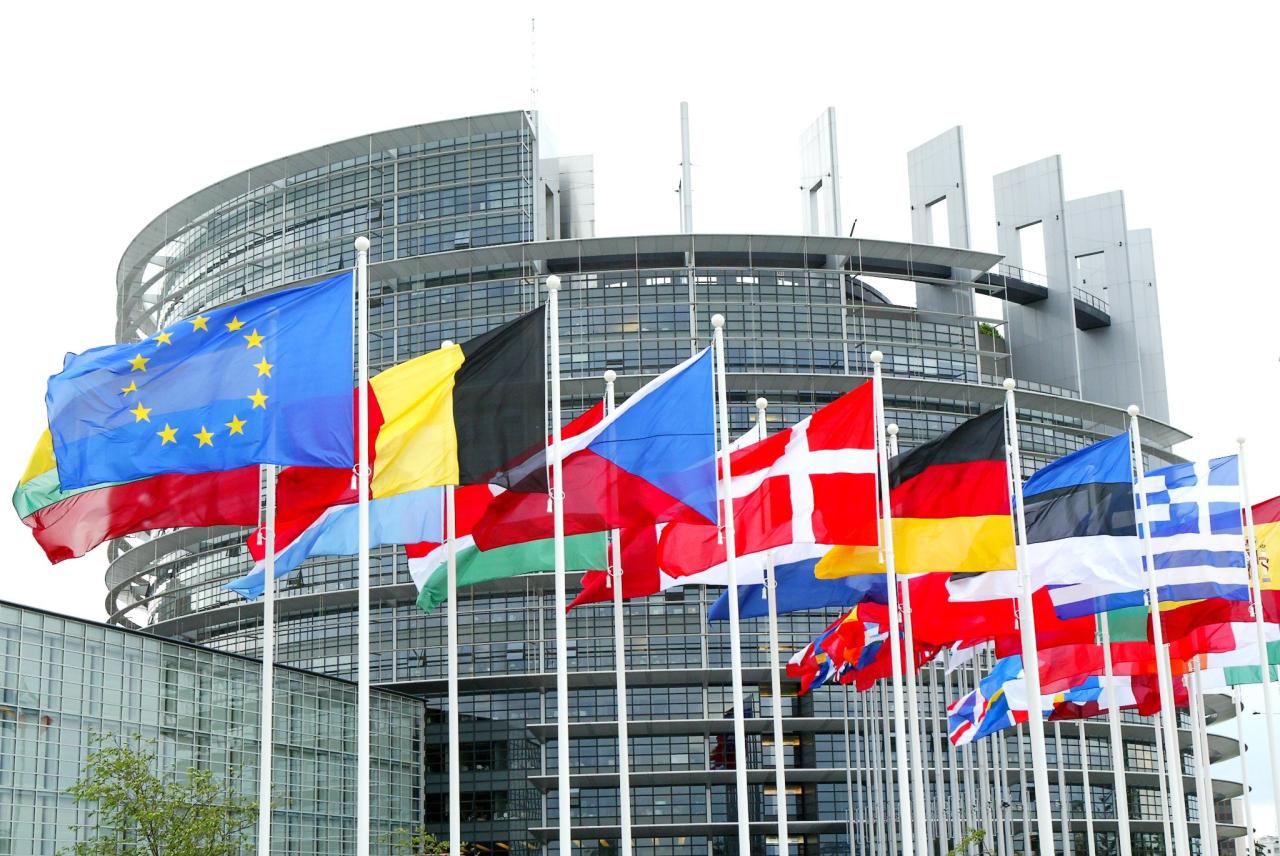
What is the European Parliament?

The European Parliament is a directly elected parliamentary institution of the European Union. Together with the European Commission and Council of the European Union, it exercises the legislative function of the EU. The Parliament is composed of 751 members, who represent the largest trans-national democratic electorate in the world and the second largest democratic electorate in the world.


What does EP do?
  • Deciding on international agreements;
  • Deciding on enlargements;
  • Granting discharge, i.e. approving the way EU budgets have been spent
  • Examining citizens' petitions and setting up inquiries;
  • Discussing monetary policy with the European Central Bank;
  • Election observations;
  • Establishing the EU budget, together with the Council;
  • Approving the EU's long-term budget - "Multiannual Financial Framework";
  • Elect the President of the Commission and approving the Commission as an authority. The opportunity to vote in favour of a motion of censure by imposing an obligation on the Commission to resign;
  • Reviewing the Commission's work program and invite it to propose legislation;
  • Adoption of EU legislation with the EU Council on the basis of proposals from the European Commission;
  • Questioning Commission and Council;
  • Democratic scrutiny of all EU institutions;
If you need help from the Parliament to act on a certain issue, you can petition it either by post or online, petitions can cover any subject which comes under the EU's remit and to submit a petition, you must be resident in the EU or be a citizen of an EU member state. Companies or other organisations must be based here.

Thursday, November 15, 2018

European Economic Community

The European Economic Community was a regional organization aimed at achieving economic integration between its Member States. It was created by the Rome Treaty of 1957. After the establishment of the European Union  in 1993, the EEC was incorporated and renamed the European Community. In 2009, the EC institutions were included in the wider EU framework and the company no longer existed.

Members of the European Economic Community
The six countries that set up the European Economic Community and the other two Communities were known as the "inner six" - "outer seven" were the countries that created the European Free Trade Association. Six countries were France, West Germany, Italy and three Benelux countries: Belgium, the Netherlands and Luxembourg. The first expansion was in 1973, when Denmark, Ireland and the United Kingdom joined. Greece, Spain and Portugal joined the 1980s. The former East Germany became an integral part of the EEC after the reunification of Germany in 1990. Since the creation of the EU in 1993, it has expanded to include sixteen other countries by 2013.

The purpose of the European Economic Community
The main objective of the preamble to the EEC was "to preserve peace and freedom and build the foundations of an ever closer union among the peoples of Europe".